Most people underestimate their rubbish. You start a garage cleanout convinced you have two trailer loads, then open a few boxes and realise it’s closer to six. You pull up bathroom tiles and suddenly there’s a pile of rubble and plasterboard that won’t fit anywhere sensible. Getting the skip bin size right before the job starts saves you from having to order a second bin, deal with a half-full oversized one you overpaid for, or worse, pack waste into your car for tip runs you swore you weren’t making.
Melbourne’s residential renovation market is as active as it has been in years. Australia generated approximately 14.4 million tonnes of building and demolition waste annually — around 562 kilograms per capita — making construction and renovation waste one of the country’s most significant waste streams. Victoria’s four-stream recycling system is now fully operational across the state, and EPA Victoria’s construction and demolition guidelines, updated in September 2025, make clear that waste from home renovations must be managed lawfully and responsibly. Using a reputable skip bin service that takes waste to authorised facilities is not just good practice; it is a legal obligation under the Environment Protection Act 2017.
The practical result of all this is simple: getting your skip bin choice right matters more now than it used to, both for the job and for compliance. This guide walks through Rolling Skips’ three bin options in detail so you can make that call with confidence before delivery day.
How Skip Bin Sizing Actually Works in Melbourne
Before choosing between Mini, Standard, and Super, it helps to understand the two variables that determine which bin is right for any given job: volume and weight.
Volume is straightforward. Skip bins are measured in cubic metres, and the number tells you how much physical space you have for waste. Rolling Skips offers two volume options: 2 cubic metres and 4 cubic metres. The jump between them is significant. A 4 cubic metre bin holds the equivalent of around 16 large wheelie bins, or six trailer loads of rubbish. That is not a marginal difference in capacity.
Weight is the variable people frequently overlook, and it is the one most likely to create unexpected costs. Heavy waste — which includes tiles, bricks, concrete, soil, sand, pavers, and rubble — is extremely dense. A relatively small volume of it can push well past a bin’s included weight allowance, and overloading attracts additional charges at 40 cents per kilogram above the limit. Understanding the wheelbarrow capacity guide for heavy waste before you start loading is one of the most useful things you can do.
Rolling Skips’ approach to this is straightforward: the Mini and Standard bins allow up to 2 wheelbarrows of heavy waste each, while the Super bin allows up to 5 wheelbarrows. Think of the wheelbarrow limit as your guide and load your heavy material first, then fill the remaining space with lighter waste.
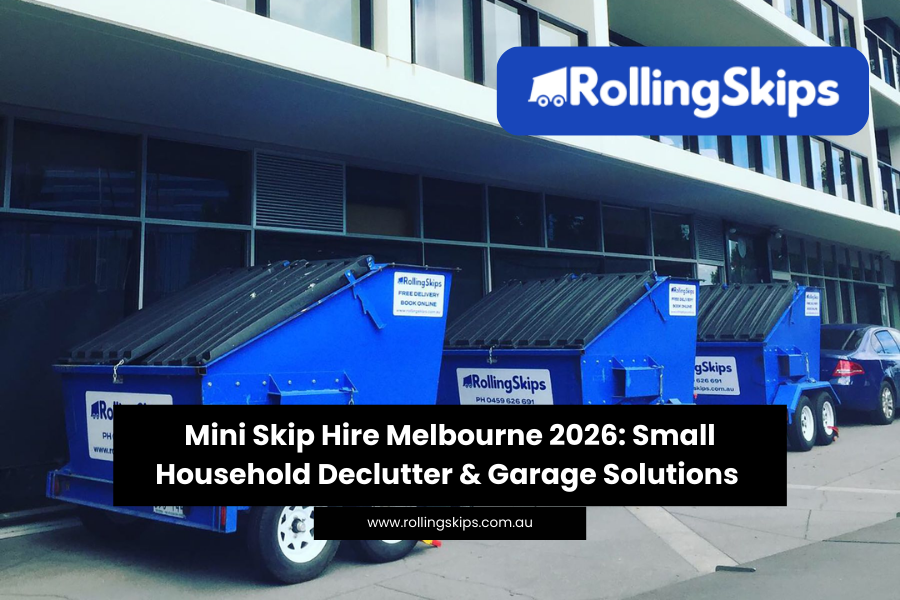
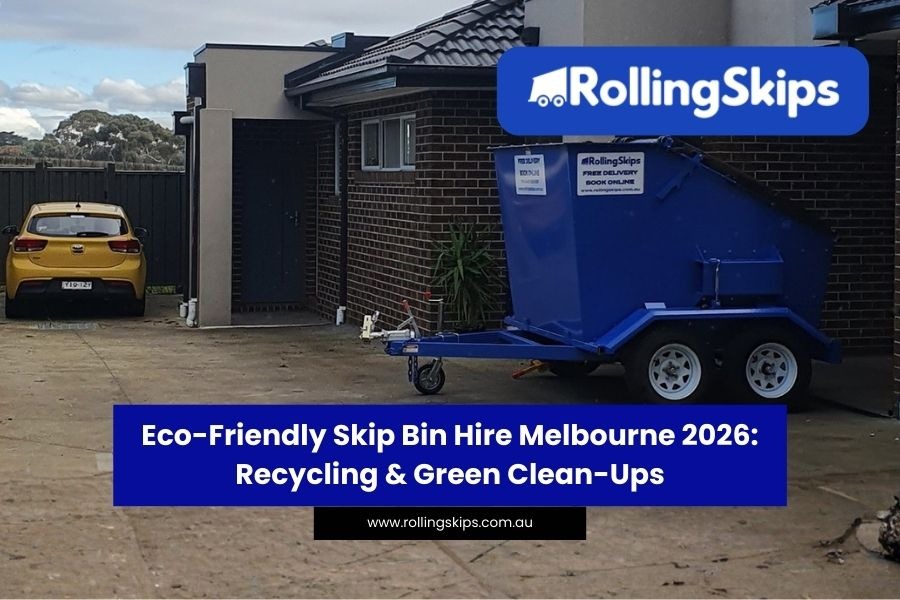
One important note on skip bin dimensions in Melbourne: regardless of which Rolling Skips bin you choose, the trailer itself is 2,300mm wide, 1,950mm high, and 3,200mm long, while the bin itself measures 1.8 metres long by 1.8 metres wide. This is a notably compact footprint. Rolling Skips’ mobile design means it fits into driveways, backyards, laneways, garages, underground car parks, and on-street parking without requiring a council permit, because the bin travels on a registered trailer and can be parked anywhere a car can legally park. That last point alone removes a layer of planning most Melbourne residents do not even realise they need with conventional skip bins.
The Mini Skip: 2 Cubic Metres, 400kg
Best for: small household cleanouts, single-room decluttering, minor garden tidy-ups
The Mini Skip holds 2 cubic metres and includes 400 kilograms of waste in the price. To put that in concrete terms, a 2m³ bin is roughly equivalent to 8 large wheelie bins — enough for a meaningful cleanout without being more than you need for a contained job.
A small skip bin for household use fits most situations where the waste is primarily light and general: old furniture, clothing, broken items, cardboard and packaging, general clutter from a garage or spare room, or garden waste from a routine tidy-up. Small tree branches up to 25mm diameter, garden clippings, shrubs, grass, weeds, and leaves all go in without issue.
The 2-wheelbarrow heavy waste allowance means there is room for a limited amount of denser material — a bucket or two of soil from a garden bed, a few old pavers, or some broken ceramics — before you hit the weight limit. If heavy waste is going to be a significant part of the load, you are looking at the Standard or Super instead.
Practical scenarios for the Mini Skip include a post-renovation room strip-out with minimal structural material, a single-room spring clean with old furniture, a pre-move declutter of a small apartment, or a backyard seasonal tidy with green waste and light garden rubbish. For anything that involves tiling, concrete, significant soil movement, or multiple rooms of builder’s waste, the volume and weight capacity of a 2m³ bin will run out faster than most people expect.
The Standard Bin: 4 Cubic Metres, 500kg
Best for: whole-house decluttering, backyard cleanouts, mixed household and garden waste
The Standard Bin is Rolling Skips’ most popular option, and it earns that position because it hits the sweet spot for most Melbourne household clean-up jobs. At 4 cubic metres with 500 kilograms included, it holds six trailer loads of rubbish — the kind of capacity that handles a thorough whole-house cleanout, a large backyard clear, or a post-renovation general clean without requiring a second bin.
The household vs heavy waste choice becomes most relevant at this size. The Standard Bin’s 500-kilogram limit and 2 wheelbarrow heavy waste guide mean it is built for mixed loads: old furniture, appliances, general rubbish, green waste, and a reasonable but not dominant amount of heavier material. A bathroom renovation where most of the waste is light demolition debris, packaging, old fixtures, and fittings, along with a controlled amount of tile waste, fits well within this profile.
Industry data consistently identifies 4 cubic metres as the most practical choice for Melbourne residents doing anything beyond a minor tidy. A family undertaking a kitchen renovation, for example, can typically avoid multiple tip runs with a single 4m³ bin and save both time and fuel. The Standard Bin handles general rubbish, green waste, and building waste (timber, steel, carpet, windows, plasterboard, metal cut-offs, doors, cupboards, kitchen and bathroom demolition material) if the weight stays within limit.
One pattern worth avoiding: piling heavy tiles or bricks in early and then wondering why the bin is at capacity before it looks full. Heavy waste compresses the weight allowance rapidly. Load the heaviest items first, track against the 2-wheelbarrow guide, and fill the remaining volume with light material.
The Super Bin: 4 Cubic Metres, 800kg
Best for: renovation demolition, builders’ waste, significant heavy material volumes
The Super Bin and the Standard Bin share the same 4 cubic metre volume, which is the first thing that surprises people when they see them side by side. The difference is entirely in the weight allowance: 800 kilograms versus 500 kilograms, and 5 wheelbarrows of heavy waste versus 2.
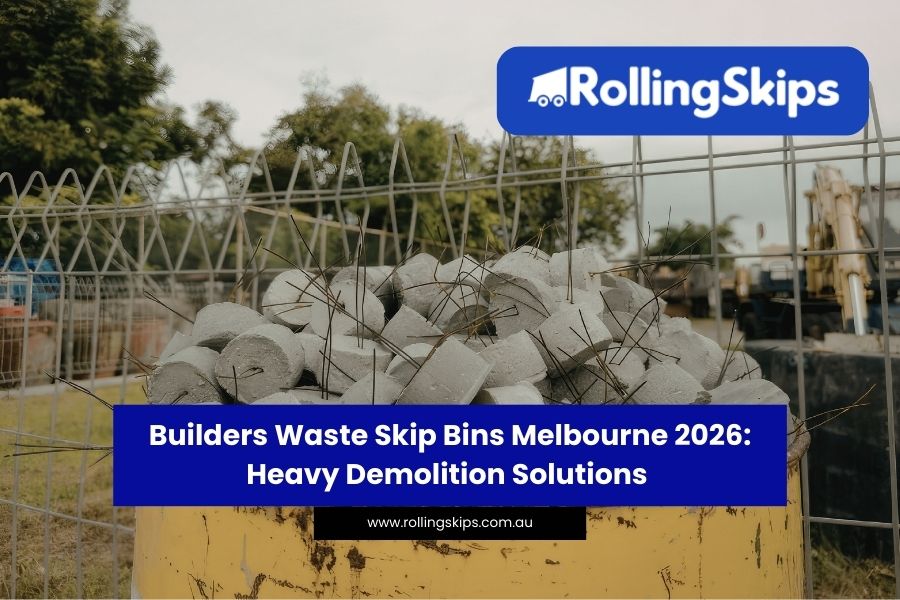
This is a large skip bin for renovation and construction work, designed specifically for the dense, concentrated material that comes off building sites. Concrete, bricks, tiles, soil, sand, pavers, rubble, and similar heavy demolition waste are exactly what the Super Bin is built for. The 300-kilogram difference in included weight between the Standard and the Super is not trivial — at 40 cents per kilogram overage, getting the sizing wrong on a heavy job can add meaningful cost quickly.
A practical illustration: a bathroom retile produces a significant volume of old tiles, adhesive, and grouting waste that is dense and heavy. A kitchen renovation that involves pulling up a tiled floor, removing a concrete bench, and clearing out ceiling plasterboard generates a load profile that sits firmly in Super Bin territory. Any job where concrete, bricks, or pavers make up a substantial portion of the waste almost certainly belongs in the Super.
The Super Bin’s 5 wheelbarrow heavy waste allowance gives tradespeople and owner-renovators genuine flexibility to handle the bulk of a renovation strip-out in a single hire. Combined with Rolling Skips’ mobile design, which reaches backyards, building sites, and tight driveways without the site constraints of conventional skip placement, the Super becomes a genuinely practical tool for Melbourne’s active renovation market.
Items that cannot go into any Rolling Skips bin regardless of size should be noted clearly: asbestos, poisons, radioactive materials, oil, paints and thinners, batteries, petrol and fuels, gas bottles, household cleaners, tyres, and mattresses all attract extra charges or fines if found in the bin. The EPA Victoria guidelines reinforce that it is your responsibility to ensure these materials are disposed of through the correct channels.
Choosing Between the Three: A Practical Decision Framework
The choice between Mini, Standard, and Super comes down to two honest questions: how much total waste are you dealing with, and how dense is it?
If the job is a single room, a light cleanout, or a routine garden tidy with minimal heavy material, the Mini Skip at 2 cubic metres covers it and keeps the cost proportionate to the task.
If the job is a whole house declutter, a general renovation cleanup, or a backyard project where waste is predominantly light to medium, the Standard Bin at 4 cubic metres is the right call and the most common solution for Melbourne households.
If the job involves any significant volume of tiles, concrete, bricks, soil, or other heavy demolition material, the Super Bin’s 800-kilogram allowance and 5 wheelbarrow heavy waste capacity make it the correct choice, not a luxury upgrade.
When genuinely uncertain, Rolling Skips recommends calling ahead to talk through the job. One over-ordered bin is always cheaper than two under-ordered ones.
Booking a Rolling Skips Bin in Melbourne
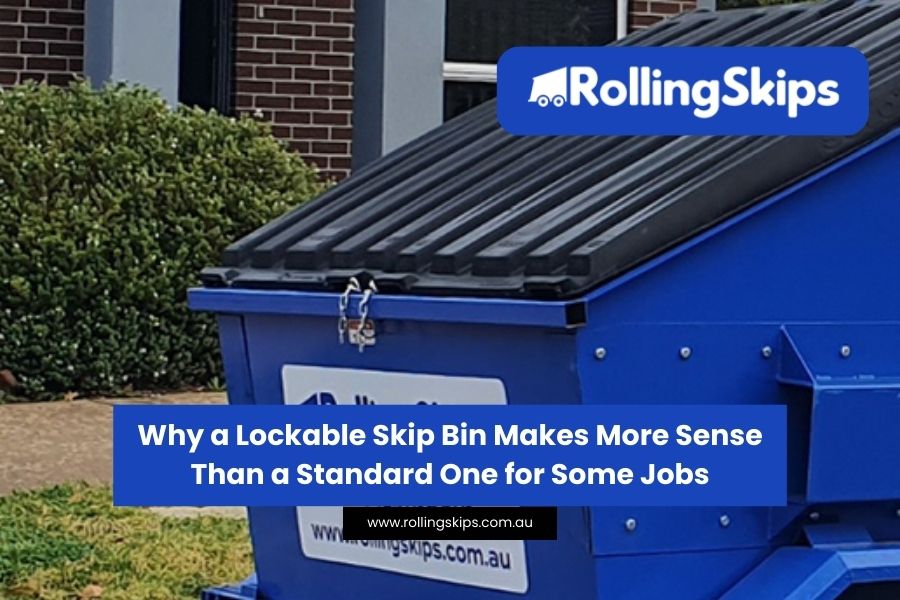
Rolling Skips delivers across Melbourne with same-day turnaround available when booked in the morning. Standard hire runs up to five days, with extensions available by calling 1300 10 66 10. Bins are delivered and collected by the Rolling Skips team, no permits required, with lockable lids as standard so your bin stays your bin for the duration of the job.
Enquiries and bookings at rollingskips.com.au or by calling 1300 10 66 10 Monday to Friday, 7am to 7pm. Email at admin@rollingskips.com.au.
Know your waste, choose your size, and get the job done without the second trip.